The short answer
Lamar Valley — often called “America’s Serengeti” — is about 120 miles (2 hours 45 minutes) from Bozeman via Gardiner. Big bison herds, elk, pronghorn and Yellowstone’s best-known wolf packs live here, and it’s on the one park road open to cars all year.
What to do
Top things to do at Lamar Valley
Wolf watching
Look for spotting scopes lined up at pullouts — wolf watchers are usually happy to share what they see.
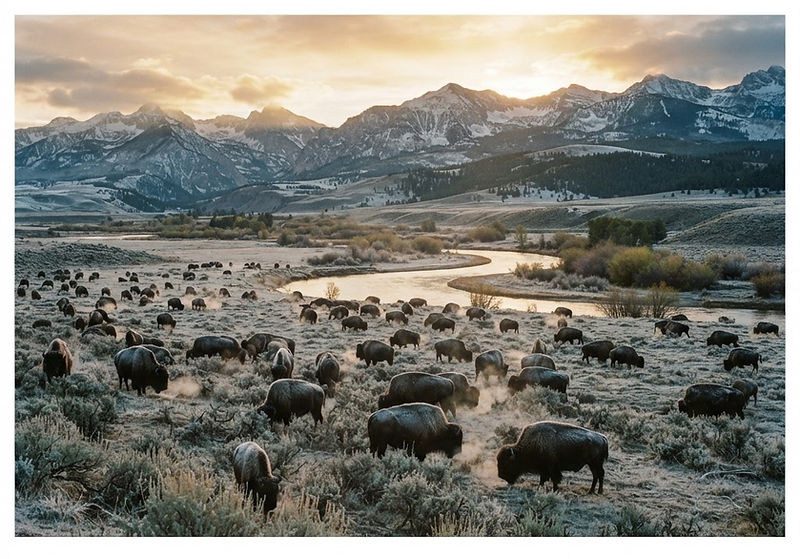
Bison herds
Hundreds of bison graze the valley floor; calves appear in spring.
Slough Creek
A favorite area for wolves, bears and fly fishing.
Winter access
The road from Gardiner to Cooke City is open to regular vehicles year-round, weather permitting.
By van
Getting there in a van
Leave Bozeman before 4:30 a.m. in summer to reach the valley at first light: I-90 east to Livingston, US-89 south to Gardiner, then through Mammoth and Tower Junction to the valley.
- Big windows make a van a rolling wildlife blind — pull fully into pullouts and let everyone look.
- Stay 100 yards from wolves and bears and 25 yards from bison and elk, even for photos.
- In winter carry a shovel, blankets and extra food; the road is plowed but remote.
Pack list
What to bring to Lamar Valley
- Binoculars or a spotting scope
- Thermos of coffee for a dawn start
- Warm hats and gloves, even in summer
- Paper map — there’s little cell service
FAQ
Lamar Valley: common questions
When is the best time to see wolves in Lamar Valley?
Dawn and dusk, and winter is often best because animals stand out against snow. Early spring is also good as packs follow the bison and elk.
Is Lamar Valley open in winter?
Yes. The road from the North Entrance at Gardiner through Lamar Valley to Cooke City is the only Yellowstone road open to regular vehicles all year, weather permitting.
Things to do here
Road trips that stop here
Keep exploring